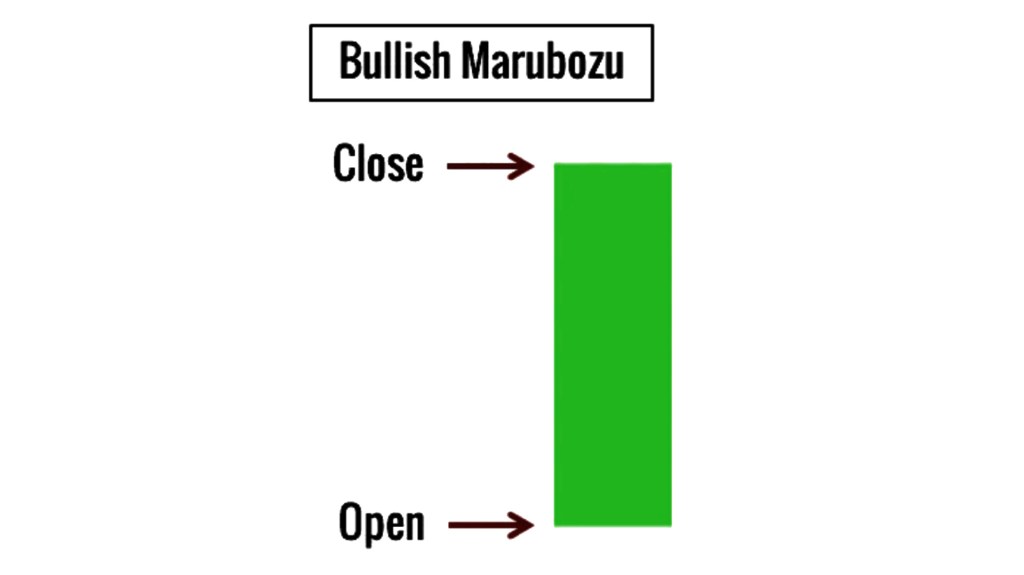
The “Bullish Marubozu” candlestick pattern is a type of candlestick formation that occurs when the open price of a security is equal to its low, and the close price is equal to its high. The term “marubozu” comes from Japanese, meaning “shaved head,” which refers to the candlestick’s lack of upper and lower shadows. The Bullish Marubozu candlestick is usually interpreted as a strong bullish signal, indicating that the buyers are in control and that the price is likely to continue to rise.
Here are the key features of the Bullish Marubozu candlestick pattern:
1) Open price equals the low: The Bullish Marubozu candlestick pattern opens at or near the low of the period and does not have a lower shadow.
2) Close price equals the high: The Bullish Marubozu candlestick pattern closes at or near the high of the period and does not have an upper shadow.
3) Long real body: The real body of the Bullish Marubozu candlestick pattern is long and bullish, indicating a strong buying pressure.
4) No shadows: The Bullish Marubozu candlestick pattern does not have any shadows, indicating that the buyers were in control throughout the period.
The Bullish Marubozu candlestick pattern is usually seen as a strong bullish signal when it appears after a downtrend or during a consolidation period. The absence of shadows in the candlestick indicates a high level of bullish conviction and suggests that the buying pressure is likely to continue in the next period.
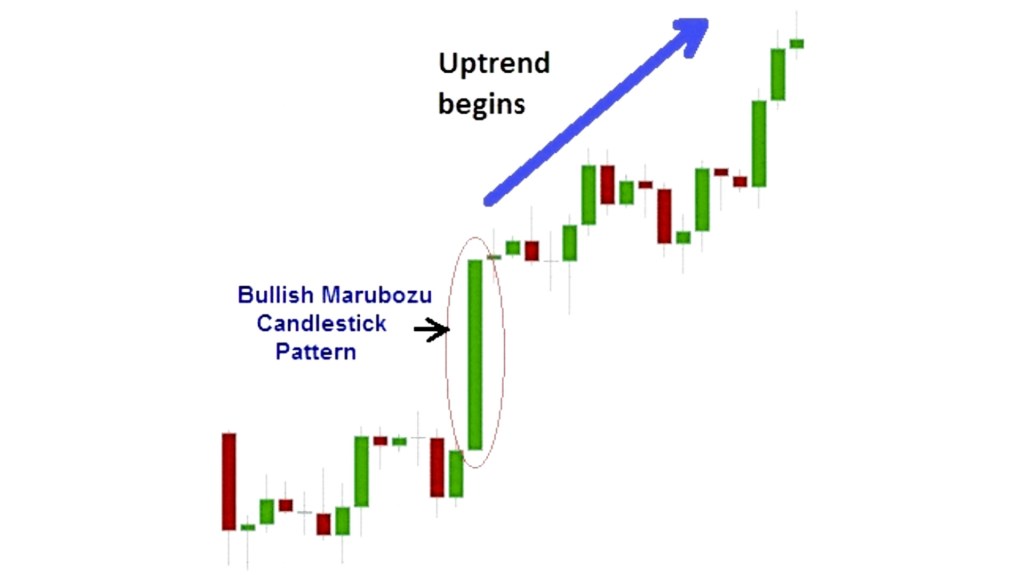
However, traders should exercise caution when interpreting the Bullish Marubozu candlestick pattern. Like all candlestick patterns, it is not a perfect predictor of future price movements, and traders should always use it in conjunction with other technical analysis tools to confirm their trading decisions.
 The Stock Stethoscope
Leave a comment