
The “piercing line” candlestick pattern is a technical analysis pattern that occurs during a downtrend and signals a potential bullish reversal. It is a two-candle pattern consisting of a bearish candle followed by a bullish candle that opens below the low of the previous bearish candle but closes above the midpoint of the previous bearish candle’s body.
Here are the key characteristics of the piercing candlestick pattern:
Downtrend: The piercing pattern typically occurs during a downtrend, which means that the price has been declining over a period of time.
Bearish candle: The pattern starts with a bearish candle that has a long real body. The longer the real body of the bearish candle, the more significant the pattern.
Bullish candle: The second candle in the pattern is a bullish candle that opens below the low of the previous bearish candle. This signals that the bears are still in control and that the downtrend is continuing.
Bullish close: However, the bullish candle closes above the midpoint of the previous bearish candle’s body. This signals a shift in market sentiment, as buyers are now pushing the price higher.
Confirmation: While the piercing pattern is considered a strong bullish reversal signal, it is always a good idea to wait for confirmation of the pattern before taking action. Traders often look for additional bullish signals, such as a bullish divergence in the MACD or RSI indicators, or a bullish candlestick pattern on a higher timeframe.
Here’s an example of a piercing candlestick pattern:
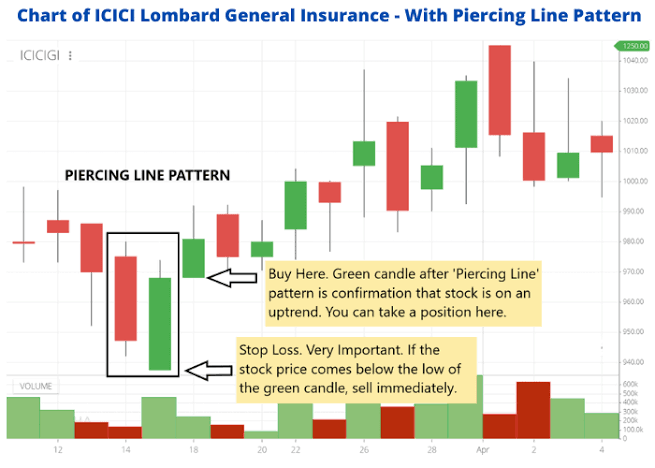
In the above example, you can see that the piercing pattern occurs during a downtrend. The first candle is a bearish candle with a long real body, and the second candle is a bullish candle that opens lower but closes above the midpoint of the previous candle’s body. This signals a potential bullish reversal, and the price does indeed move higher in the following candles.
Overall, the piercing candlestick pattern is a reliable bullish reversal signal that traders can use to identify potential buying opportunities during a downtrend.
 The Stock Stethoscope
Leave a comment