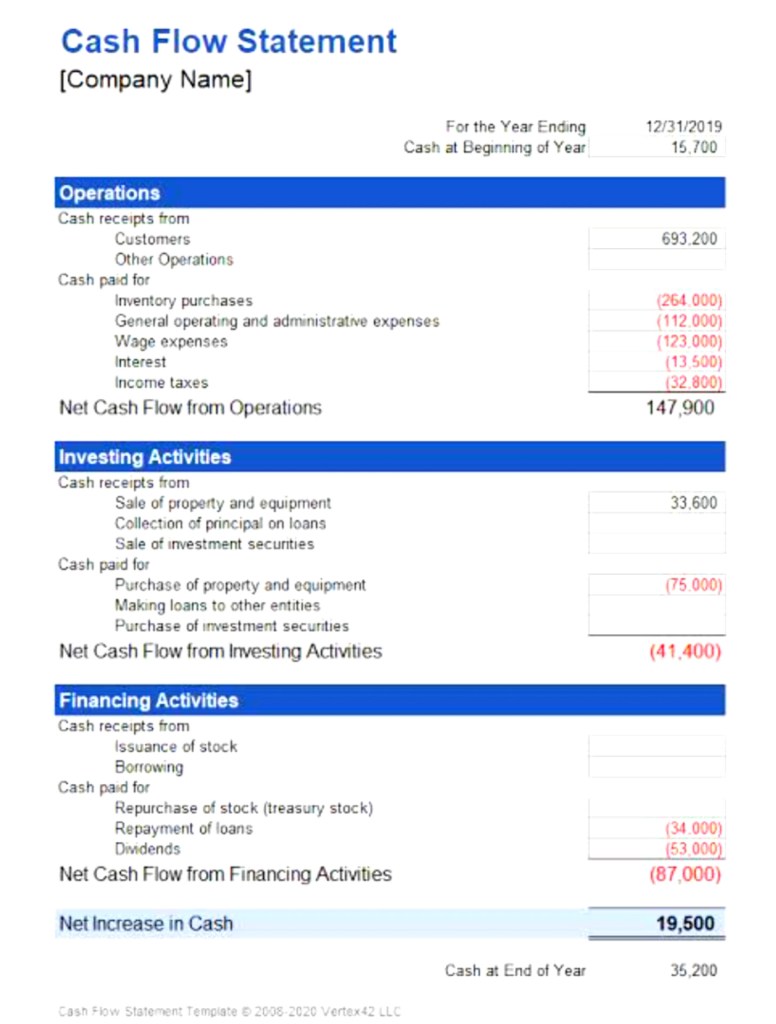
By examining a company’s cash flow statement, investors and analysts can gain insights into how a company is managing its cash resources and whether it is generating enough cash flow to support its operations and growth. This information can be used to make informed investment decisions.
Cash flow refers to the movement of cash in and out of a business over a specific period of time. It is an important metric in fundamental analysis that provides insights into a company’s financial health and ability to meet its obligations.
In fundamental analysis, there are three categories of cash flow activities that are examined:
Operating activities:
Cash flow from operations (CFO) is a measure of the amount of cash a business generates from its core operations in a given period of time. It represents the cash inflows and outflows resulting from a company’s revenue-generating activities, excluding financing and investing activities.
CFO is calculated by taking a company’s net income and adjusting for non-cash expenses such as depreciation, amortization, and changes in working capital. It provides insights into a company’s ability to generate cash from its primary business activities.
Positive cash flow from operations indicates that a company is generating enough cash from its operations to cover its operating expenses and invest in future growth. Conversely, negative cash flow from operations suggests that a company is not generating enough cash from its core operations to cover its expenses and may be relying on external sources of funding to support its business.
Investing activities:
Cash flow from investing activities is a section in a company’s cash flow statement that reports the cash inflows and outflows related to the purchase, sale, or disposal of long-term assets, such as property, plant, and equipment, and investments in securities.
Examples of cash inflows from investing activities include cash received from the sale of a long-term asset or investment, and cash received from the repayment of a loan that was made to another entity. Examples of cash outflows from investing activities include cash paid to purchase a long-term asset or investment, and cash paid to make loans to another entity.
Cash flow from investing activities is important to investors and analysts because it provides insight into a company’s long-term growth and expansion strategies. A positive cash flow from investing activities suggests that a company is making investments in its business and is likely to grow in the future. A negative cash flow from investing activities may indicate that a company is divesting or reducing its long-term assets and investments, which could affect its future growth prospects.
Financing activities:
Cash flow from financing activities is a section on a company’s cash flow statement that shows the net inflows and outflows of cash resulting from financing activities, such as issuing and repurchasing stocks and bonds, paying dividends, and obtaining or repaying loans.
In general, positive cash flow from financing activities means that a company has received more cash inflows than outflows from financing activities, which can indicate that the company is generating funds from sources other than operations. Conversely, negative cash flow from financing activities means that a company has paid out more cash than it received in financing activities, which can indicate that the company is relying on financing to fund its operations or investments.
Investors and analysts use the cash flow from financing activities to assess a company’s ability to fund its operations and growth, as well as its financial health and stability. It is important to analyze the cash flow from financing activities in conjunction with other sections of the cash flow statement, such as cash flow from operating activities and cash flow from investing activities, to gain a comprehensive view of a company’s cash flow situation.
 The Stock Stethoscope
Leave a comment