
Stock market is a place where buyers and sellers meet to buy and sell shares of listed companies. A “stock market” , “share market” or “stock exchange” are the terms often used interchangeably like the terms “shares”, “securities” or “stocks”.
Traders in the stock market can buy or sell shares on one or more stock exchange that are part of the overall stock market. Stock markets are components of a free-market economy because they enable democratized access to investor for trading and exchange of capital.
Stock market creates efficient price discovery and efficient dealing and acts as a barometer for the overall economy. Here, buyers and sellers are assured of a fair price, high degree of liquidity, and transparency as market participants compete in the open market.
A listed company means a public company that is listed on a stock exchange and the shares of which are available for the public for trading. A private corporation goes public through a process called IPO.
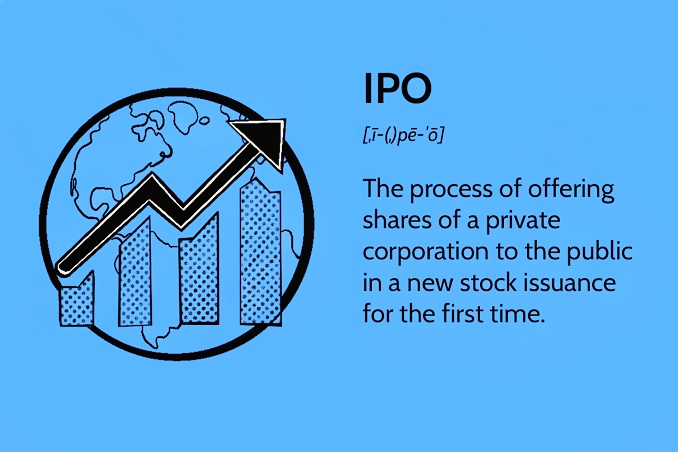
An Initial Public Offering (IPO) refers to the process of offering shares of a private corporation to the public in a new stock issuance.
A company has to meet the requirements set by the exchanges and the regulators to hold an IPO.
IPOs provide companies with an opportunity to obtain capital by offering shares through the primary market.
Companies hire investment banks to market, gauge demand, set the IPO price and date etc. The primary market is where securities are created so they can be sold to investors for the first time during the IPO. Here, the securities are bought directly from the issuer. But once a company gets listed, all the shares or securities including the existing shares are bought through the stock exchange or the secondary market.
Before an IPO, a company is considered private. So as a private company before the IPO, the business has grown with a relatively small number of shareholders including early investors like the founders, family, and friends along with professional investors such as venture capitalists or angel investors. An IPO can be seen as an exit strategy for the company’s founders and early investors, realizing the full profit from their private investment.
The public market opens up a huge opportunity for millions of investors to buy shares in the company and contribute capital to a company’s shareholders’ equity. The public consists of any individual, institutional investor or foreign investors who is interested in investing in the company.
What Are the Benefits of IPO to Investors?
IPO enables companies to raise money even during economic downturns when banks are reluctant to lend money.* It helps companies get listed on major stock exchanges and makes them more attractive to potential investors. It helps increase transparency in business dealings.
Greater Liquidity
Once a company goes public, investors can sell the company’s stock on the open market. This allows investors to realize their gains without waiting for their shares to be repurchased. Since a company’s shares can be bought or sold at any time, it increases liquidity for investors.
Diversification
When a company goes public, they trade shares between investors on an exchange. This creates greater diversity among investors, as no one investor ends up with a majority share of the company’s outstanding stock. As such, owning the stock of a publicly-traded company provides a form of diversification for investment portfolios.
Greater Capital Markets Access
An initial public offering allows companies to raise capital from institutional investors, which is often unavailable from private sources like venture capitalists or angel investors due to legal and regulatory restrictions under securities laws.
Furthermore, since these exchanges are open markets and are available to many investors through broker/dealers and other financial intermediaries, publicly traded companies have access to capital that may not otherwise be available.
Raise Money
A reason for going public is to raise money for the business. As per SEBI guidelines, a company can use IPO to increase to 20 per cent of its capital from the market. This is a boon for any business looking to expand and do big things.
Increase Brand Equity
Brands are built on trust and credibility. When you make a product or service available for everyone to see, you build consumer confidence in your brand. This leads to better sales and more profits.
Discipline Management
Going public encourages managers to focus on profits over other goals like growth or expansion. It also facilitates communication with shareholders because they cannot hide their problems.
Outsiders Perspective
On going public, a company gets an outside perspective on its business model, marketing strategies, and other aspects that could prevent it from profitability.
Pre-IPO investors can also make money when a company debuts on the stock market, but only if it does well. If the IPO does not do well, these investors could lose money just as quickly as any other investor buying stock directly from a public company.
Wrapping Up!
IPOs help companies raise money without seeking funds from banks or financial institutions, which may charge high-interest rates on their loans. It also allows existing investors to sell their stake in the company without incurring capital gains tax.
 The Stock Stethoscope
Leave a comment